

Conex Bänninger fittings for drinking water
Is every fitting suitable for drinking water installations?
No.
The fact that a fitting is made of copper or stainless steel does not automatically mean it can be used in potable water systems. Its suitability is determined primarily by whether all materials in contact with the water comply with hygiene requirements and whether they can withstand long-term operation.
Not only the fitting body matters, but also all connection components, including seals, alloy composition, and resistance to corrosion and chlorine. Materials that do not meet the required standards may lead to deterioration of water quality, increased corrosion risk, deposition of corrosion products, or premature wear of installation components.
For this reason, only systems with the appropriate approvals and certifications confirming their suitability for contact with drinking water should be used in potable water installations.
Conex Bänninger products hold certifications such as:
PZH (Poland), DVGW (Germany), KIWA (Benelux), and WRAS (United Kingdom), confirming compliance with the requirements applicable in the most important European markets.
Which fittings should be selected for drinking water installations?
A single-family house, hotel, hospital, or industrial plant — each of these applications places different demands on the installation. So how do you select the right system?
Start by answering one question: Where will the installation be operating?
Where should system selection begin?
The selection of fittings for drinking water installations should primarily be based on operating conditions and project requirements. Key factors include:
- Type of building (residential, hotel, hospital, industrial plant)
- Water quality and chemical composition
- Operating temperature and pressure
- Hygiene and corrosion-resistance requirements
- Pipe material
- Expected service life and intensity of use
For typical single-family and multi-family residential buildings, copper systems are an excellent solution. In facilities with higher hygiene requirements, such as hospitals, laboratories, and food or chemical processing plants, stainless steel systems are often preferred due to their high corrosion resistance and ease of maintaining hygienic standards.
Multi-layer pipe systems are also widely used, employing either compression or press fittings. Each application places different demands on joining methods, material compatibility, and joint durability, which is why system selection should always be tailored to the specific application.
Single-family house? >B< Press is the optimal choice
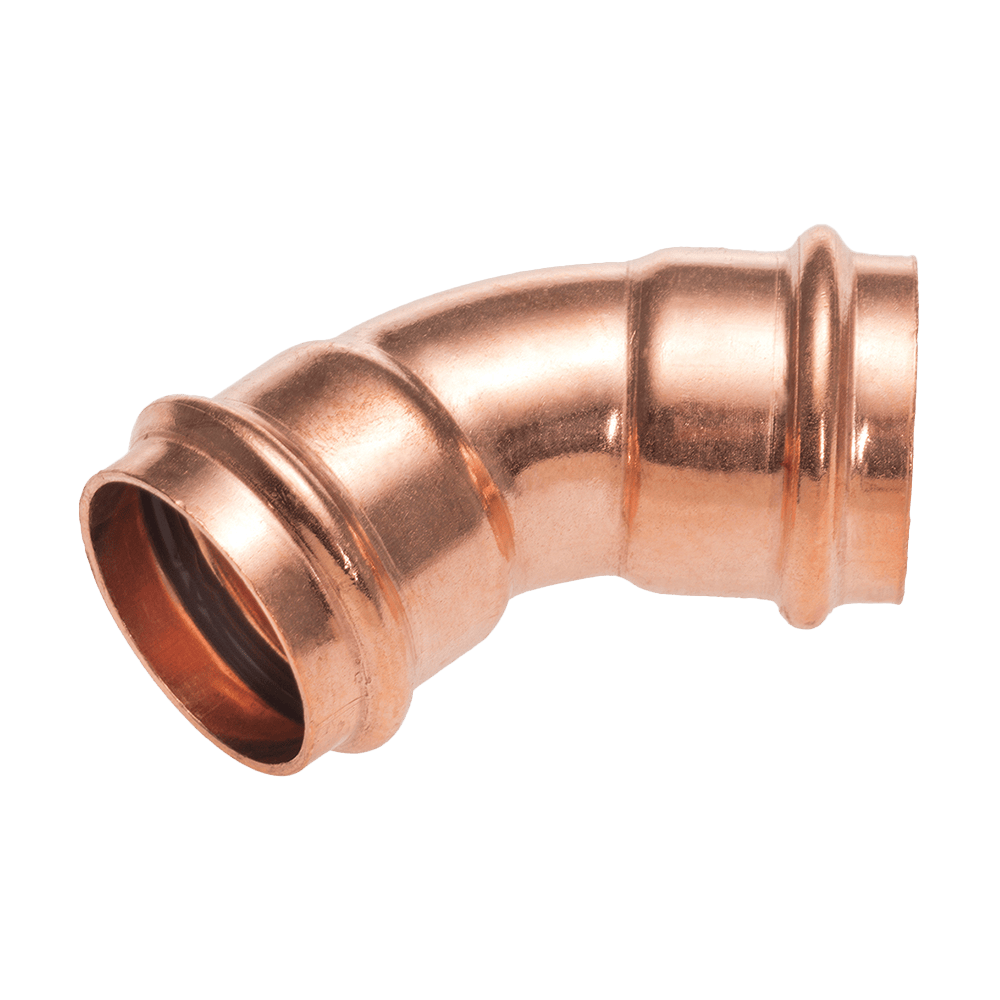
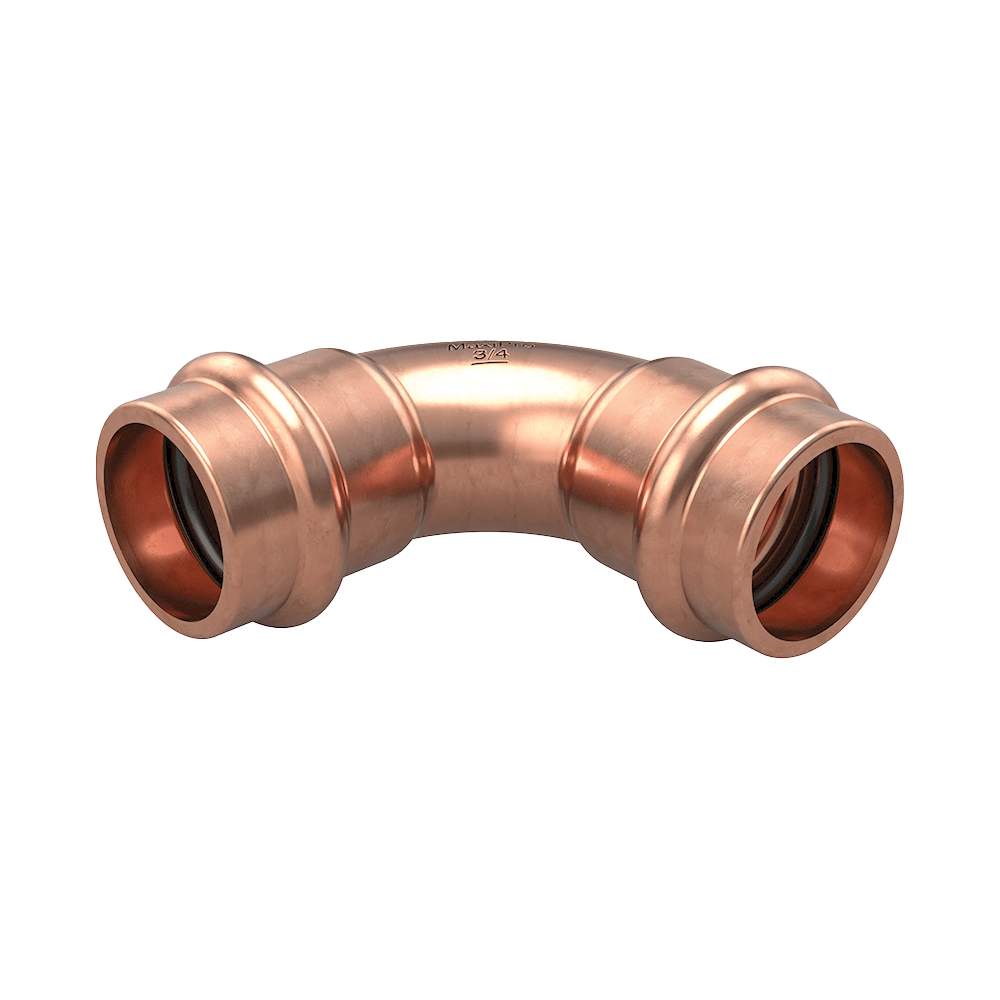
In domestic drinking water installations in single-family and multi-family residential buildings, alongside plastic systems, copper systems remain a common choice. This is due to copper’s durability, corrosion resistance, and decades of successful use in sanitary installations. The >B< Press system has been specifically designed for potable water installations and meets all requirements for materials in contact with drinking water. The fittings are manufactured from high-quality copper and copper alloy, while the EPDM seals are selected to ensure safe operation in drinking water systems. This means that the entire system meets hygiene requirements, including both metallic components and elastomers that come into direct contact with flowing water.
A key technical advantage is the press-fit technology, providing high mechanical strength. An additional benefit is the sealing O-ring with the Press Indicator system, which helps identify unpressed fittings during pressure and leak testing, even at very low test pressures.
The system is available in sizes 12-108 mm, making it suitable for domestic drinking water installations as well as larger residential, commercial, and industrial projects.
When is a 316L stainless steel system the right choice?
Not every potable water installation requires fittings made of stainless steel. However, certain projects demand stainless steel due to operating conditions, hygiene requirements, or the nature of the facility.
The >B< Press Inox 316L system is manufactured from stainless steel grade 1.4404 (AISI 316L) containing molybdenum. This element significantly improves resistance to corrosion and chlorine exposure.
The fittings are equipped with EPDM O-rings approved for contact with drinking water.
The >B< Press Inox 316L system is frequently used in: hospitals, laboratories, sports facilities, food-processing plants, chemical industry facilities.
Press technology eliminates the need for open flames, reducing installation time and eliminating risks associated with the use of soldering torches, while ensuring durable and repeatable joints suitable for modern potable water systems.
Does capillary soldering still have a place in drinking water installations?
Despite the rapid growth of press-fit technology, capillary soldering remains a recognised connection method for drinking water systems. In many instances, it is required by project specifications or results from the need to extend or modernise existing installations constructed using the same technology.
The durability of soldered joints depends primarily on correct pipe preparation and the use of appropriate solder and flux approved for drinking water installations. Properly executed joints offer high mechanical strength and long-term durability. For such applications Conex Bänninger offers solder fittings approved for use in drinking water installations.
Series 5000
Series 5000 includes a wide range of copper capillary solder fittings designed for drinking water, heating, and, in certain configurations, gas installations.
The fittings are manufactured to precise dimensional tolerances, ensuring correct capillary gap filling by solder and a durable leak-tight connection.
The system is backed by a 25-year warranty.
Series 4000
Series 4000 comprises bronze fittings with reduced lead content, making them particularly suitable for drinking water installations.
Capillary soldered joints provide excellent durability and resistance to long-term operation.
The system is available in sizes 6-108 mm, enabling use in both small-scale and extensive commercial or industrial systems.
What about threaded connections?
Although press-fit and capillary soldering technologies dominate modern drinking water installations, threaded connections still play an important role.
They are mainly used for connecting: valves, water meters, filters, pumps, other devices requiring periodic dismantling or servicing.
They are also frequently utilised during refurbishment projects and when connecting various installation components.
Series 3000
Series 3000 includes threaded fittings manufactured from high-quality bronze.
Bronze offers excellent corrosion resistance and long-term durability, making these fittings suitable both for new installations and renovation projects.
Series 8000M
Series 8000M includes threaded fittings made from high-quality brass, manufactured in accordance with PN-EN 1254-4, which specifies requirements for copper and brass threaded fittings.
Precision manufacturing and dimensional accuracy ensure durable, leak-tight joints without the need for specialised tools.
Drinking water installations using multi-layer pipes
Multi-layer piping systems account for a large proportion of new construction projects due to their: low weight, corrosion resistance, easy transport, simple installation. For these systems, Conex Bänninger offers the >B< Flex range. These press fittings have been designed specifically for durable and leak-tight connections of multi-layer pipes used in drinking water systems.
The system incorporates EPDM seals approved for contact with drinking water, ensuring that all components in contact with the medium meet hygiene requirements for potable water applications.
Not every installation requires a press tool
In practice, situations still arise where press-fit technology is either impractical or uneconomical. This particularly applies to: refurbishment projects, localised repairs, areas with limited access.
For these applications, Conex Compression fittings are an ideal solution. They enable durable connections without the use of either a press tool or open flame. Thanks to their brass compression ring design, they provide excellent leak-tightness and long service life, making them suitable for both new installations and refurbishment of existing drinking water systems.
What about installation repairs?
In drinking water systems, there is often a need to repair damaged pipework sections quickly without extensive intervention in the wider system. For such applications, >B< Oyster repair fittings are available. The >B< Oyster system has been specifically developed for repairing damaged pipe installations. Its design allows rapid and durable restoration of pipe continuity while minimising both repair work and system downtime.
Which system should you choose?
|
Type of project
|
Recommended system |
| Single-family homes | >B< Press, >B< Flex |
|
Multi-family residential buildings
|
>B< Press |
|
Hospitals
|
>B< Press Inox 316L |
|
Food and chemical industry facilities
|
>B< Press Inox 316L |
|
Refurbishment projects
|
Conex Compression |
| Soldered installations | Serie 5000, 4000, 3000 |
| Repair applications | >B< Oyster |
Selecting fittings for drinking water installations should not be based solely on the joining technology. Equally important are the fitting material, seal performance, compliance with applicable standards, and approvals for contact with potable water.
Conex Bänninger offers solutions covering all commonly used drinking water installation technologies, including press systems, capillary solder fittings, threaded fittings, compression fittings, and systems for multi-layer pipes. Each solution has been developed for specific applications and operating requirements.
When selecting a system, the primary considerations should be the nature of the project and the operating conditions:>B< Press – for fast and repeatable installations using copper pipes.
>B< Press Inox 316L – for facilities with enhanced hygiene requirements and higher corrosion resistance demands.
Series 5000 and 4000 – where capillary soldering is specified or when modernising existing installations.
Series 3000 and 8000M – for durable threaded connections and connecting valves and equipment.
>B< Flex – for installations using multi-layer pipes.
Conex Compression – for refurbishment, repairs, and connections that do not require press-fitting or soldering.
>B< Oyster – for repairing damaged installations.
Regardless of the technology selected, it is essential to use complete systems possessing the appropriate approvals for contact with drinking water. This ensures compliance with applicable standards, safe operation, and reliable long-term performance.
Related News
News
30 Jun 2026
How to choose the right press jaws and press tool for press systems
News
01 Jun 2026
K65 in 2 5/8″ size – new opportunities for large CO₂ installations
News
30 Apr 2026