
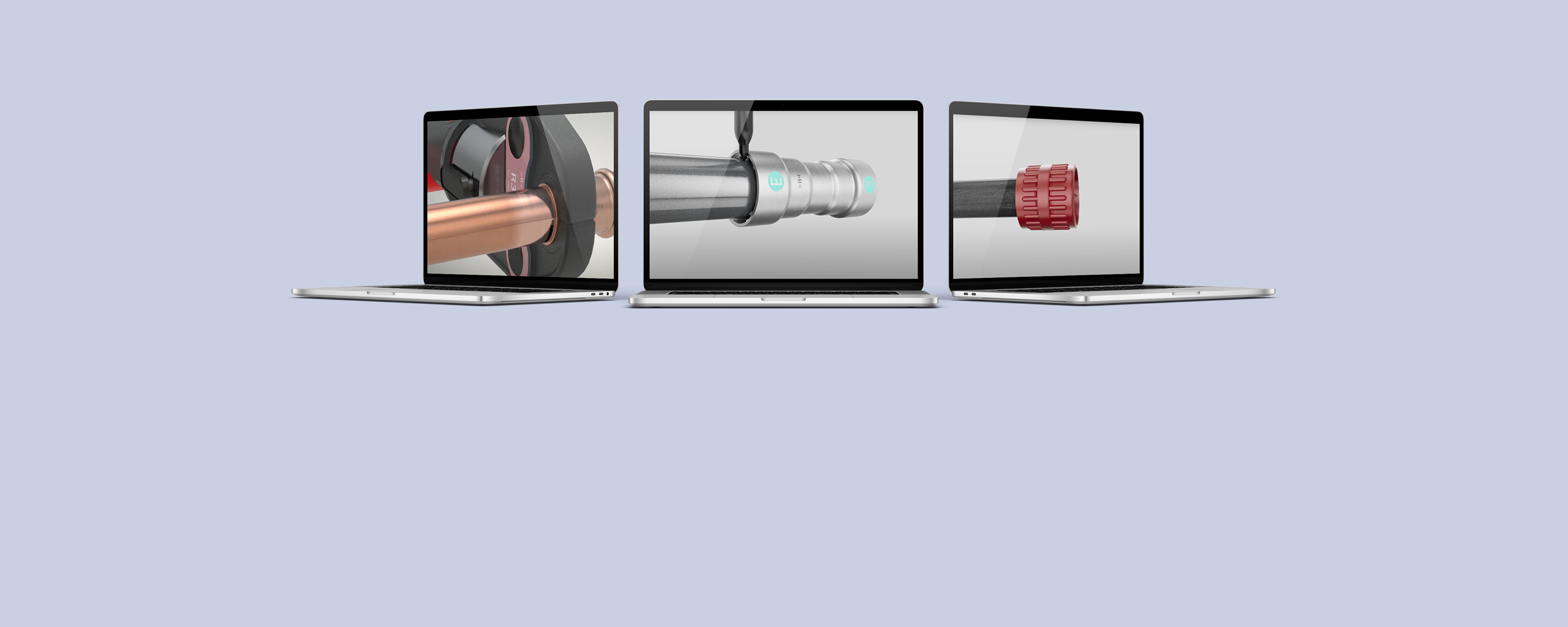

Deburring is a topic that still sparks debate in the installation industry. For some, it feels like an unnecessary extra step; for others, it’s an absolute must. In reality, there should be no doubt: it is one of the most important stages in preparing a pipe for installation. If it is skipped, the consequences can be costly.
Why is deburring so important?
Although it may seem like a small detail, deburring is one of the most critical steps in preparing pipes for installation.
When done correctly, it helps prevent leaks, gasket damage, corrosion and even noise caused by turbulence.
Here’s what every installer should know about deburring — and why skipping this step is never worth the risk.
What is deburring?
Deburring is the process of removing burrs and sharp edges created on the ends of pipes after cutting.
A burr can appear even when using a professional pipe cutter.
This tiny imperfection can affect the tightness of the installation, create turbulence within the flow, and even lead to mechanical damage, acoustic issues or corrosion.
Internal and external deburring
Both the inside and outside edges of the pipe must be cleaned.
External deburring prevents damage to the sealing element when inserting the pipe into the fitting.
Internal deburring prevents the narrowing of the pipe’s cross-section, turbulence and — importantly — erosion corrosion.
Why does deburring matter so much?
When cutting a pipe — even with high-quality tools — the wall is compressed, creating burrs on the inside. These burrs restrict the flow area and disrupt smooth flow, which can result in:
- turbulence caused by the moving medium,
- excessive noise, especially when the pipe also has poor acoustic insulation,
- increased sound pressure (above 30 dB(A), not compliant with current standards),
- erosion corrosion — particularly in metal installations
(This occurs when flowing medium mechanically removes the protective metal layer. Once the layer is damaged, it cannot regenerate, and the pipe begins to degrade faster.), - potential damage and failures, such as cut O-rings or damaged seals.
What happens if you skip deburring?
- A pipe inserted without deburring may damage the fitting after pressing.
- You may need to dismantle and reinstall large parts of the system.
- Increased risk of complaints and wasted time.
- Reduced durability and reliability of the entire installation.
- Deburring eliminates these risks by ensuring smooth flow, reducing material wear and improving long-term performance.
- Improper pipe preparation is not just an aesthetic issue — it is a technical, financial and legal risk.
How to deburr properly?
- Remove burrs immediately after cutting the pipe.
- Clean both internal and external edges.
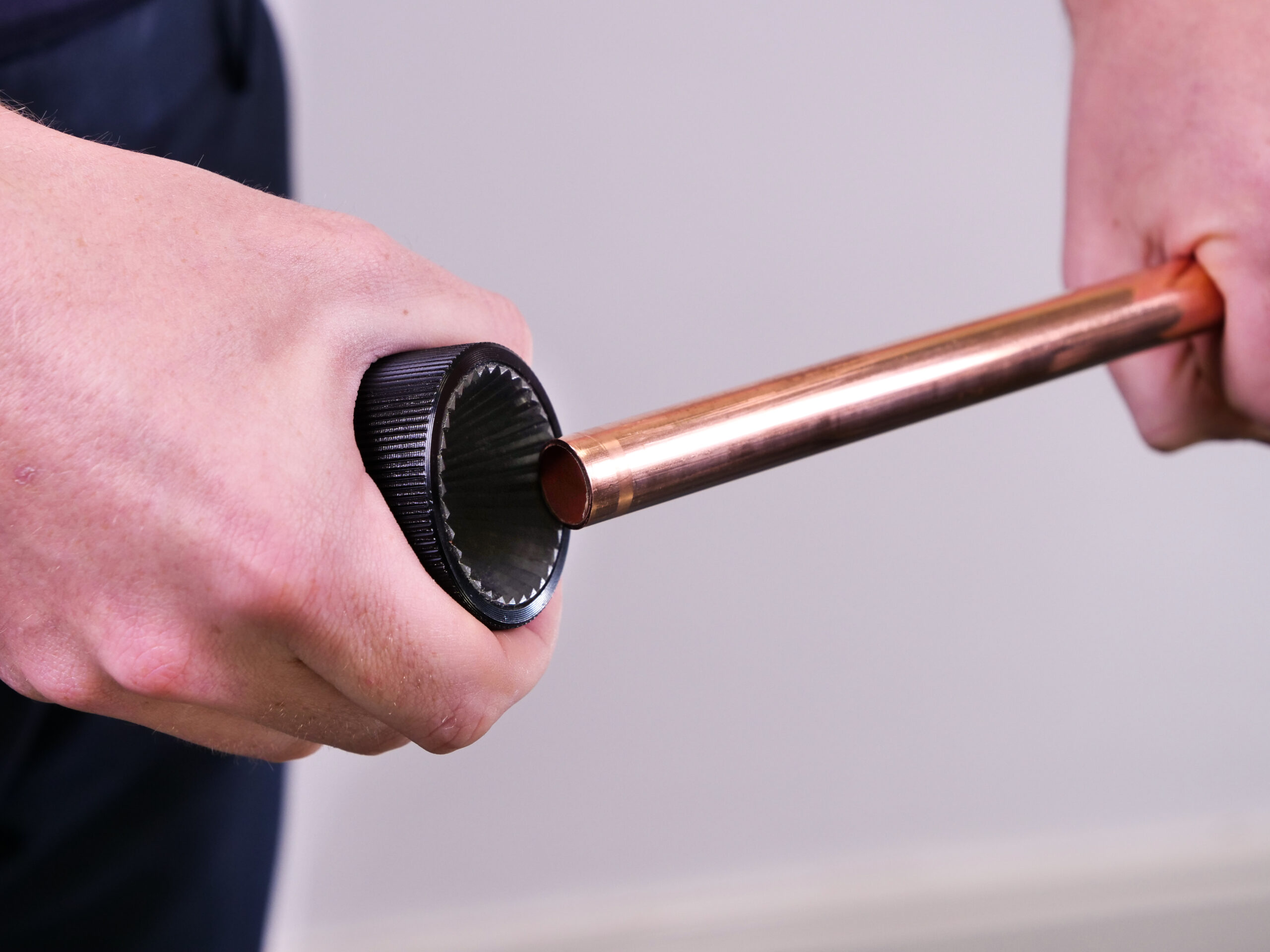
- Use the correct tool — a professional deburrer.
- Check the result — the edge should be smooth, slightly rounded and free of sharp fragments.
- After proper deburring, the pipe can be inserted into the fitting with confidence.
What tools should you use for deburring? Types of deburring tools.
A universal deburring tool is a small, useful and essential item that should be in every installer’s toolbox.
For manual deburring, the most commonly used tools are:
- conical deburrers – ideal for small diameters,
- deburrers with replaceable blades,
- rotary hand deburrers,
- pencil-style deburrers.
These tools are handy, inexpensive and very effective.
They ensure clean, smooth pipe ends that are ready for installation.
Ordinary knives or files do not offer this level of precision — and can even damage the pipe.
Tip:
To achieve the best results, always make sure the deburrer’s blade is sharp and clean before you begin.
Deburring = professionalism
Deburring is an absolute obligation for professionals and an integral part of any properly executed installation — just as important as correct pressing or pressure testing.
This responsibility, along with all potential consequences of skipping the step, ultimately lies with the installer or installation company.
It’s important to note that if an installation fails due to the absence of deburring, no warranty claims can be made against the fitting manufacturer.
Deburring is explicitly required in every installation manual.
For this reason alone, as the installer or the person responsible for the installation, you should always ensure the deburring process is performed correctly and professionally.
At Conex Bänninger, installation quality is our priority.
That’s why we always recommend paying attention to the details — because the details determine the durability and reliability of the entire system.
Related News
News
30 Jun 2026
How to choose the right press jaws and press tool for press systems
News
01 Jun 2026
K65 in 2 5/8″ size – new opportunities for large CO₂ installations
News
30 Apr 2026